

Spring
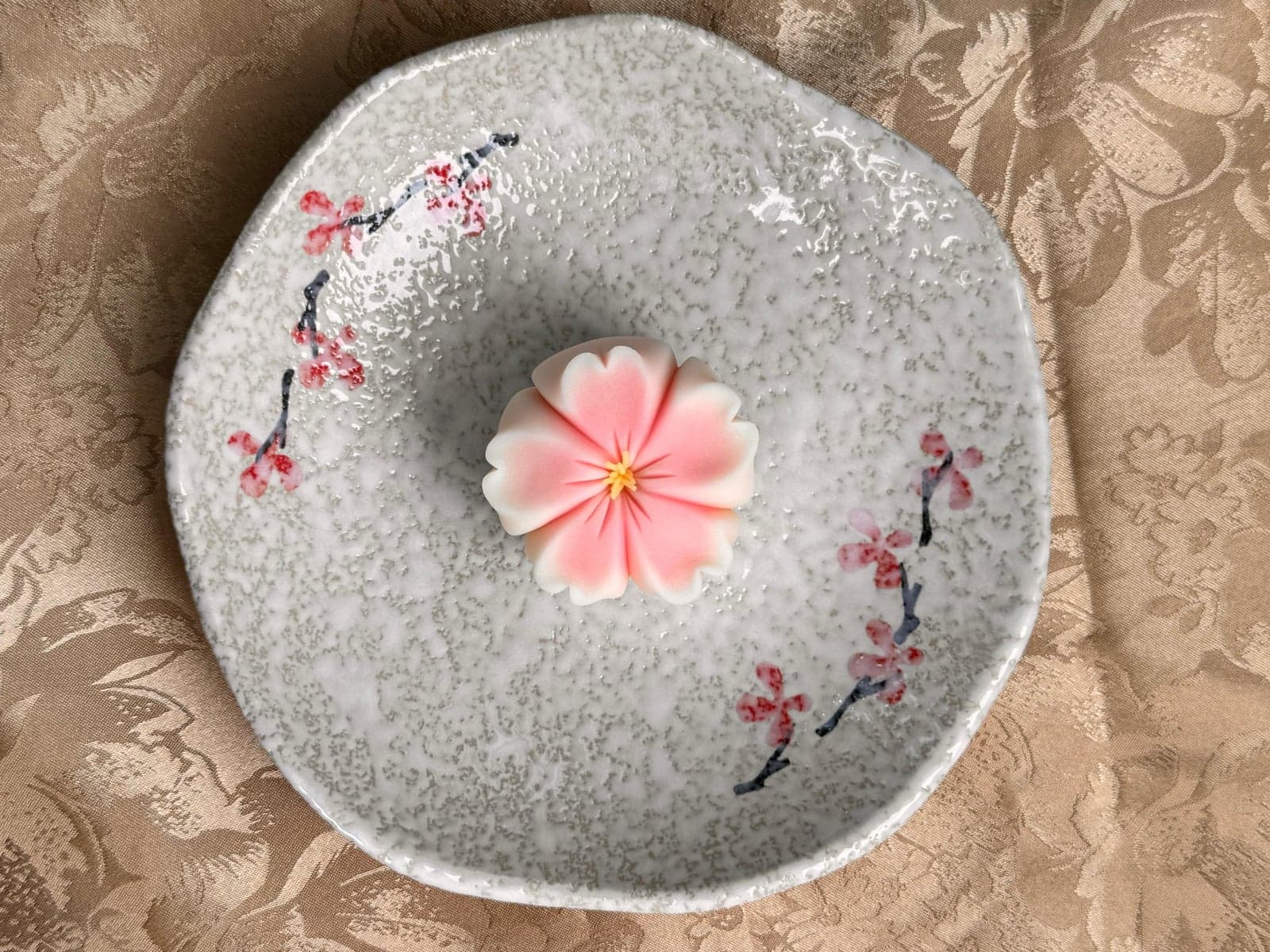
Soft colour, buds, blossoms, and the promise of a new beginning.
Current chapter: The encounter
序 — An edible expression of time
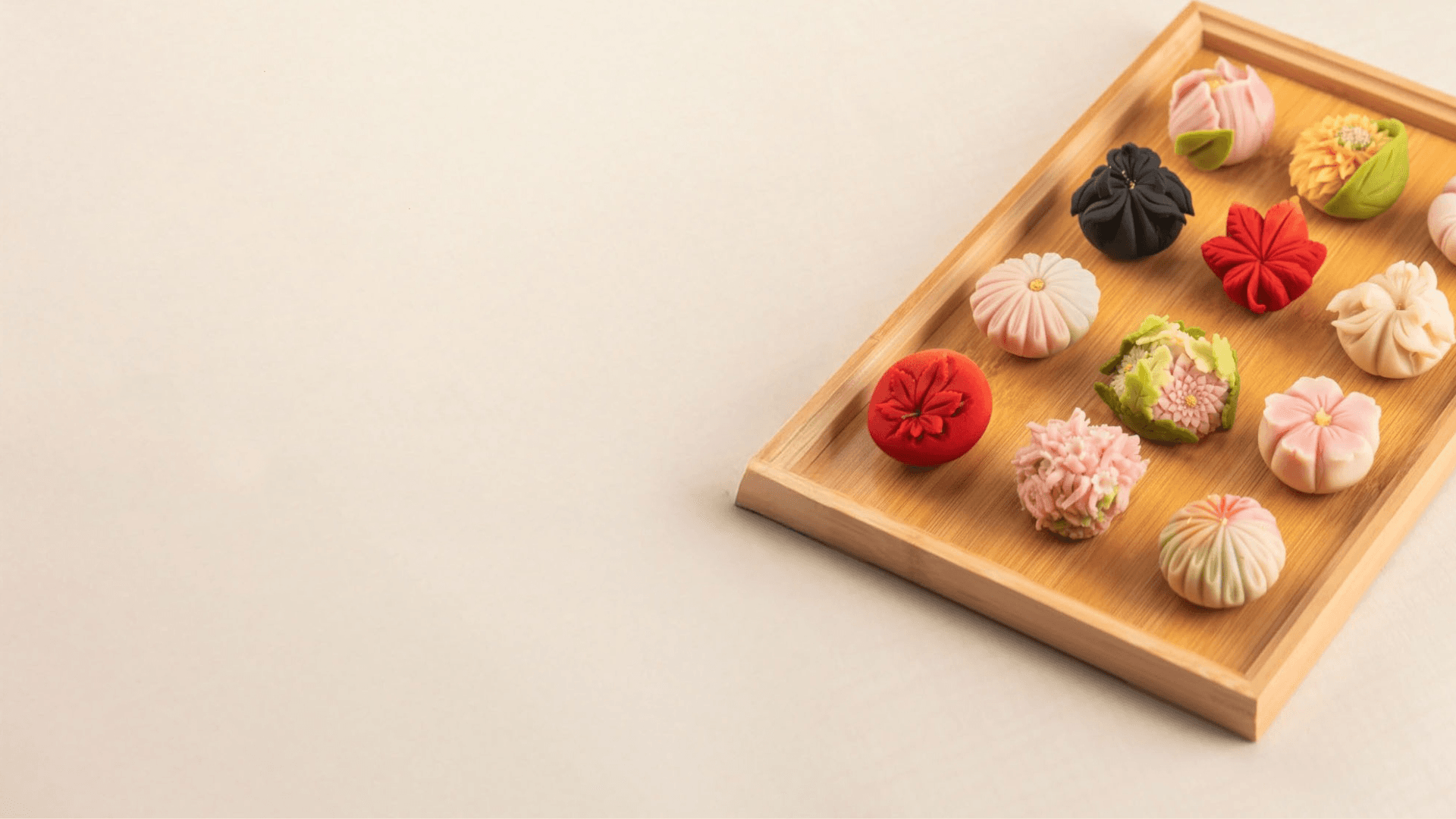
Wagashi is Japanese confectionery made to be tasted with more than the tongue. Its colour, form, name, and occasion can hold a season, a memory, or a welcome.
Enter the story↓時 — A journey through time
It did not appear overnight. It gathered meaning, one generation at a time.
This is a living evolution rather than a single origin story: land, exchange, tea, artistry, and modern life continue to shape one another.
Jōmon–Yayoi: early Japan
Long before today's refined forms, chestnuts, wild fruit, and pounded rice offered a simple sweetness shaped entirely by place and season.
Nara & Heian periods
Buddhist temple offerings and karagashi—the earliest confections imported from Tang-dynasty China—turned fruit and rice into something set apart for court and ceremony.
Muromachi & Sengoku periods
As the tea ceremony matured under masters like Sen no Rikyū, confections became tea's quiet companion, while Portuguese traders' nanban-gashi introduced refined sugar and new techniques.
Edo period
Wagashi grew increasingly expressive through colour, form, naming, poetry, festivals, and the changing natural world.
Meiji to Shōwa periods
Western contact and industrialisation brought new tools and mass production, even as regional wagashi became prized meibutsu—local souvenirs carried home from a journey.
Today
Wagashi now lives in ceremonies, neighbourhood shops, contemporary cafés, workshops, and new creative interpretations.
季 — The language of nature
Wagashi does not simply reproduce a flower or a leaf. It suggests a moment through palette, silhouette, texture, and a name—leaving space for imagination.
Soft colour, buds, blossoms, and the promise of a new beginning.
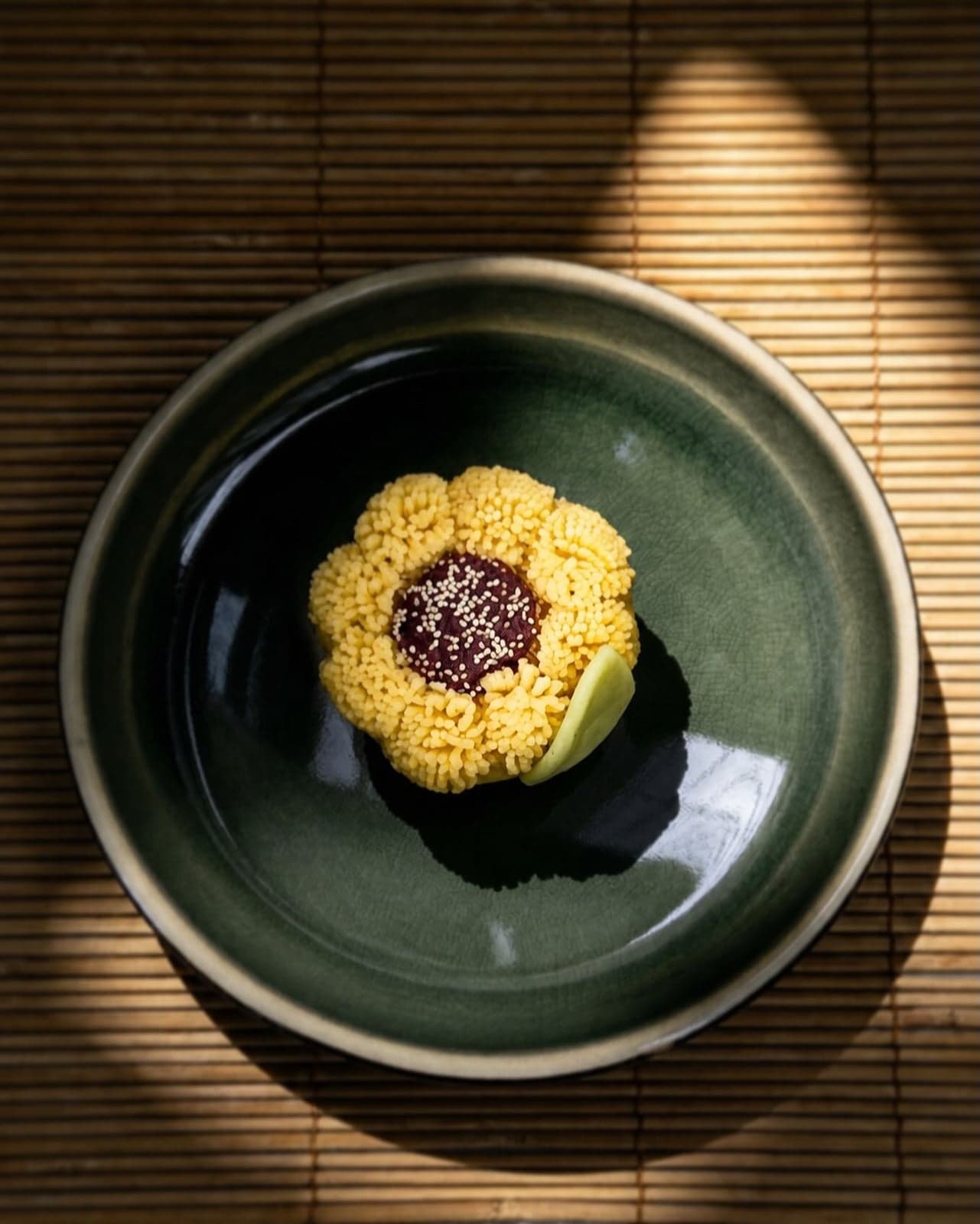
Clear forms and cooling impressions offer a pause from the heat.
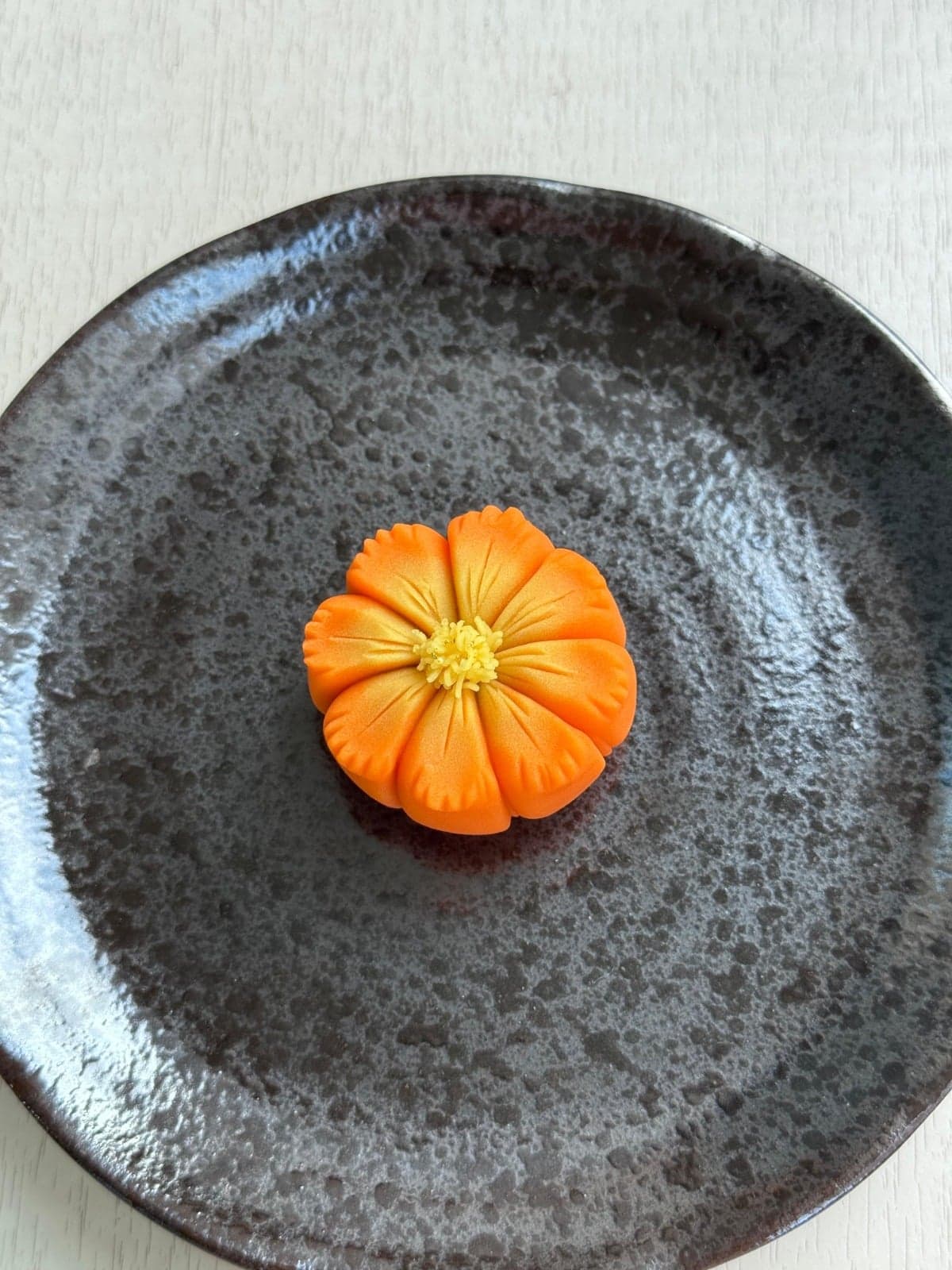
Warm earth, ripening fields, and leaves caught at the turn of colour.
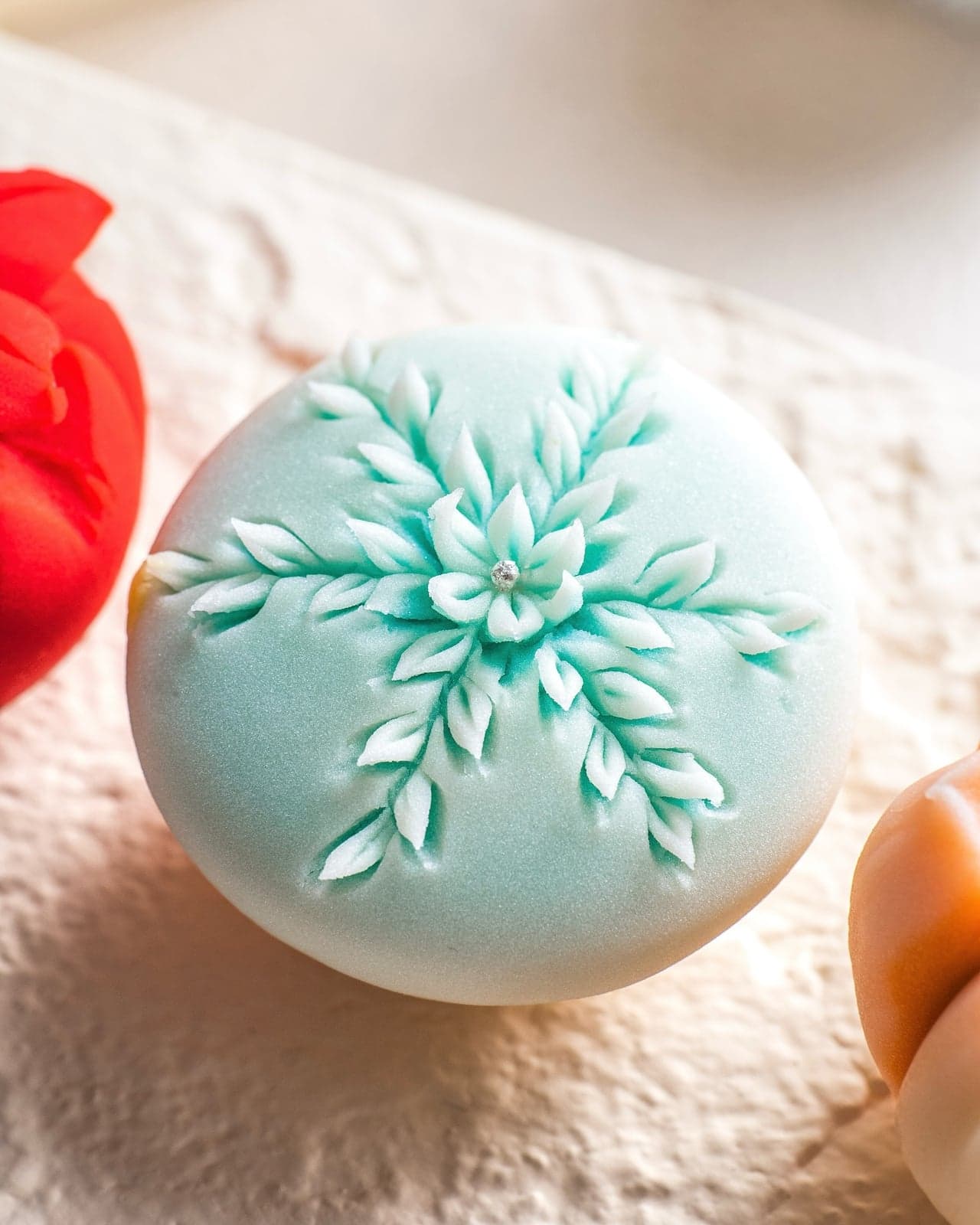
Quiet palettes, spare lines, and beauty discovered in stillness.
蔵 — The Wagashi archive
From an everyday favourite to a rarer regional sweet, these fifteen forms trace much of what Wagashi can become—each with its own ingredients, texture, occasion, and story.
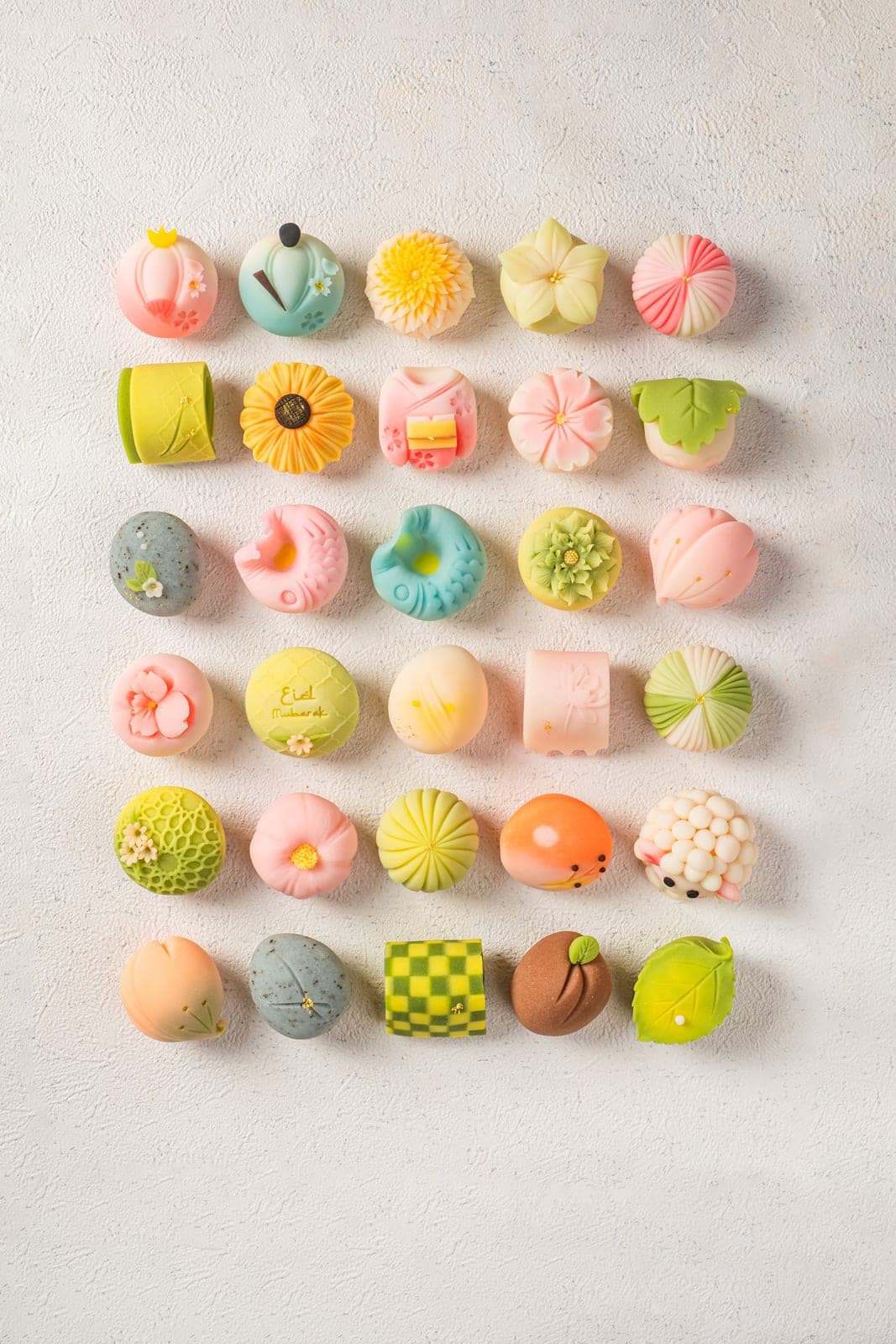 01
01Elm's signature craft
One of Wagashi's most expressive forms—shaped, coloured, and textured to suggest flowers, weather, and fleeting moments.
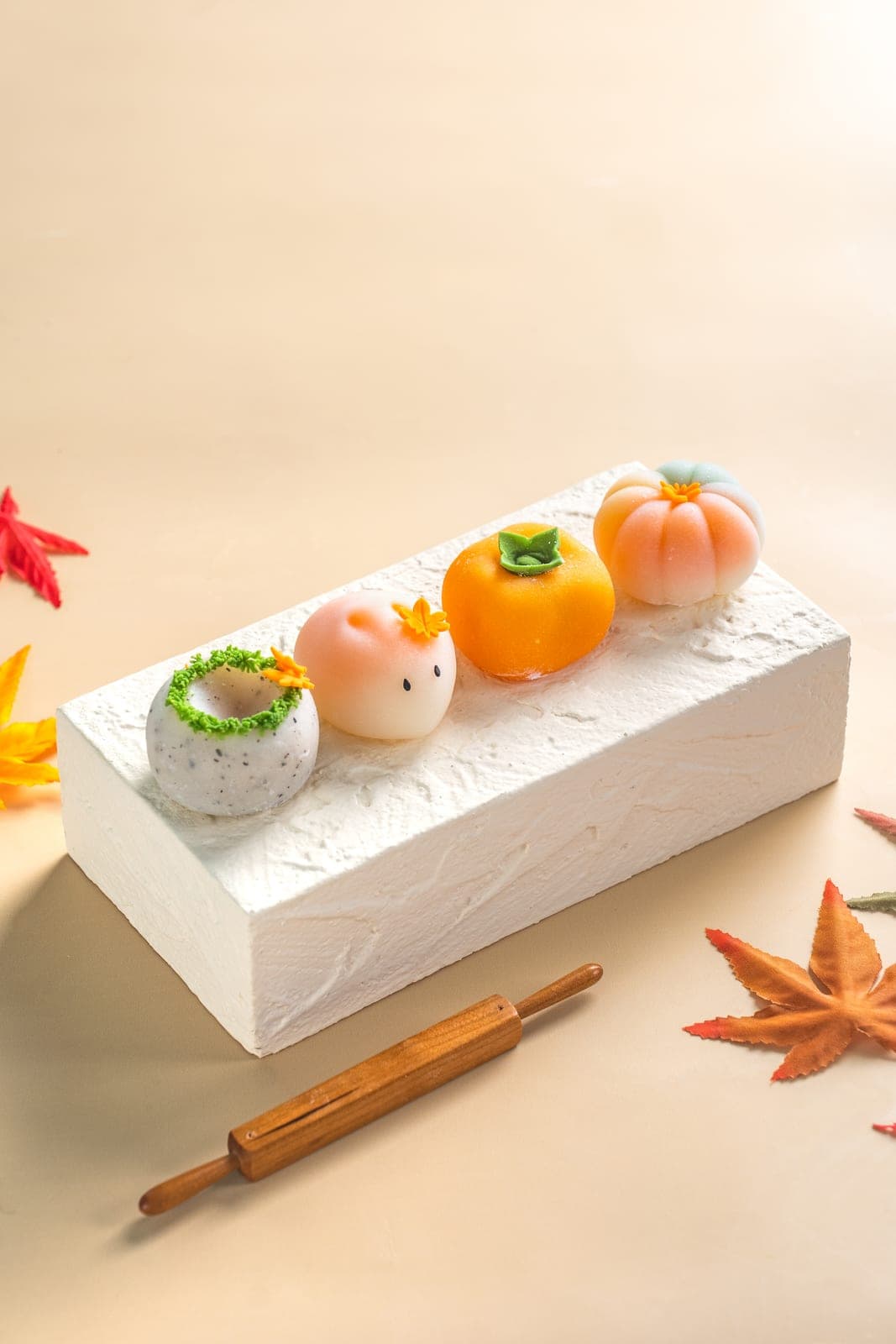 02
02Steamed rice-flour classic
A steamed, jelly-like cake of rice flour and sugar, milder and denser than mochi, often layered or flavoured with matcha or seasonal fruit.
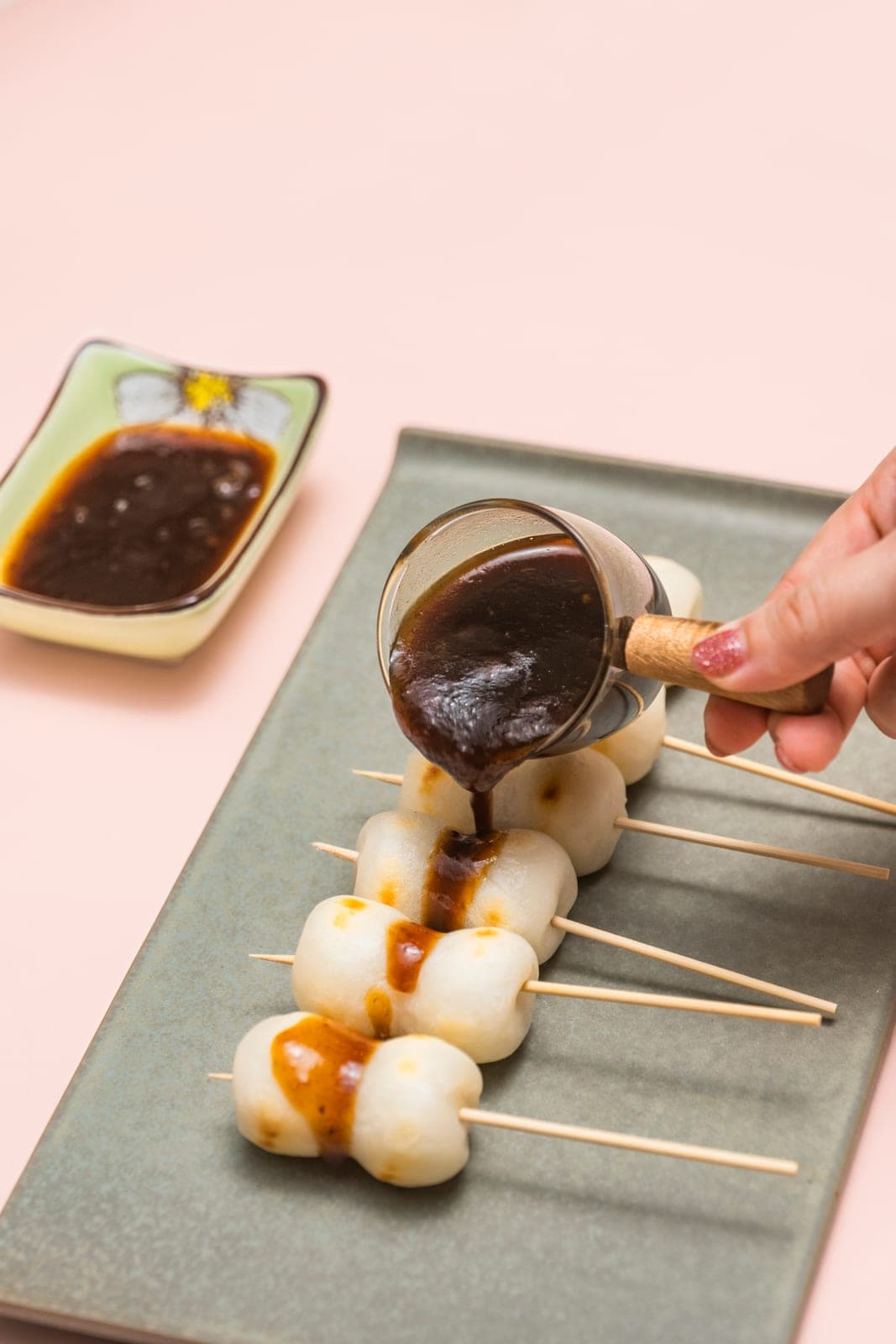 03
03Chew and ritual
Rice-based dumplings with a gentle chew. Certain varieties are connected with seasons, observances, and festivals.
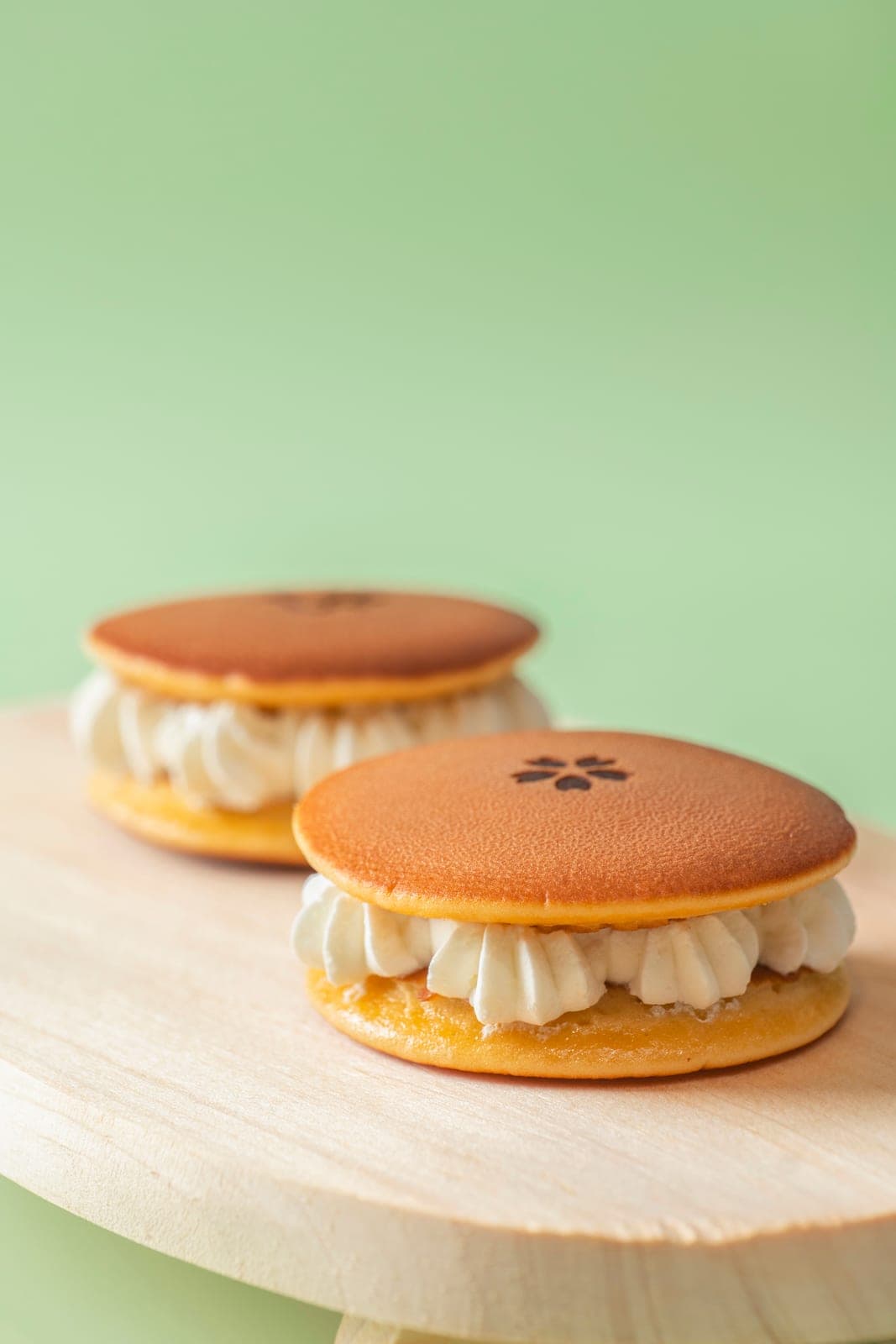 04
04A familiar doorway
Two soft, pancake-like layers hold sweet red bean paste—a welcoming introduction to the wider Wagashi world.
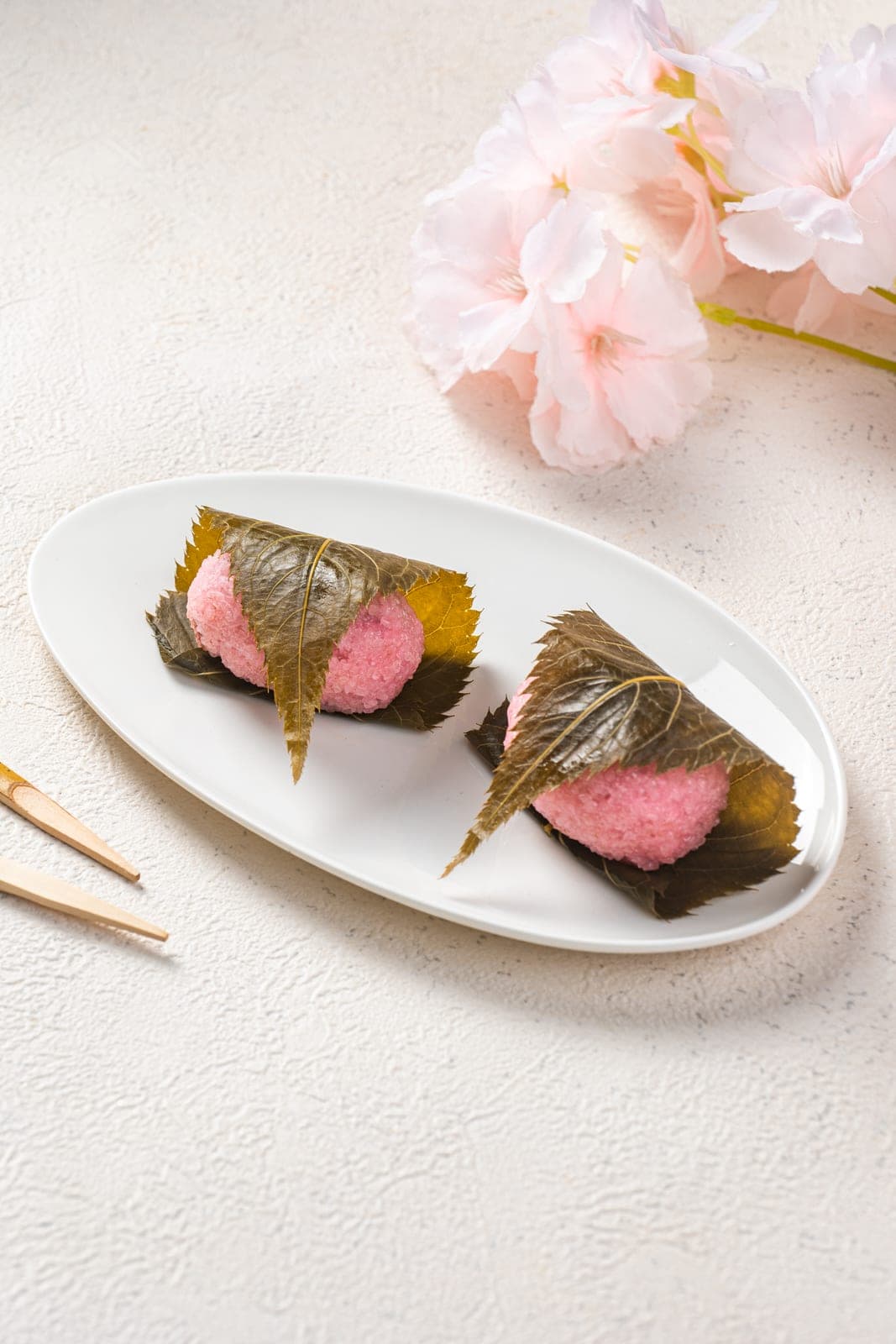 05
05Spring's edible signature
Pink-tinted mochi or dough wrapped around sweet red bean paste and bound in a preserved cherry blossom leaf, marking the arrival of spring.
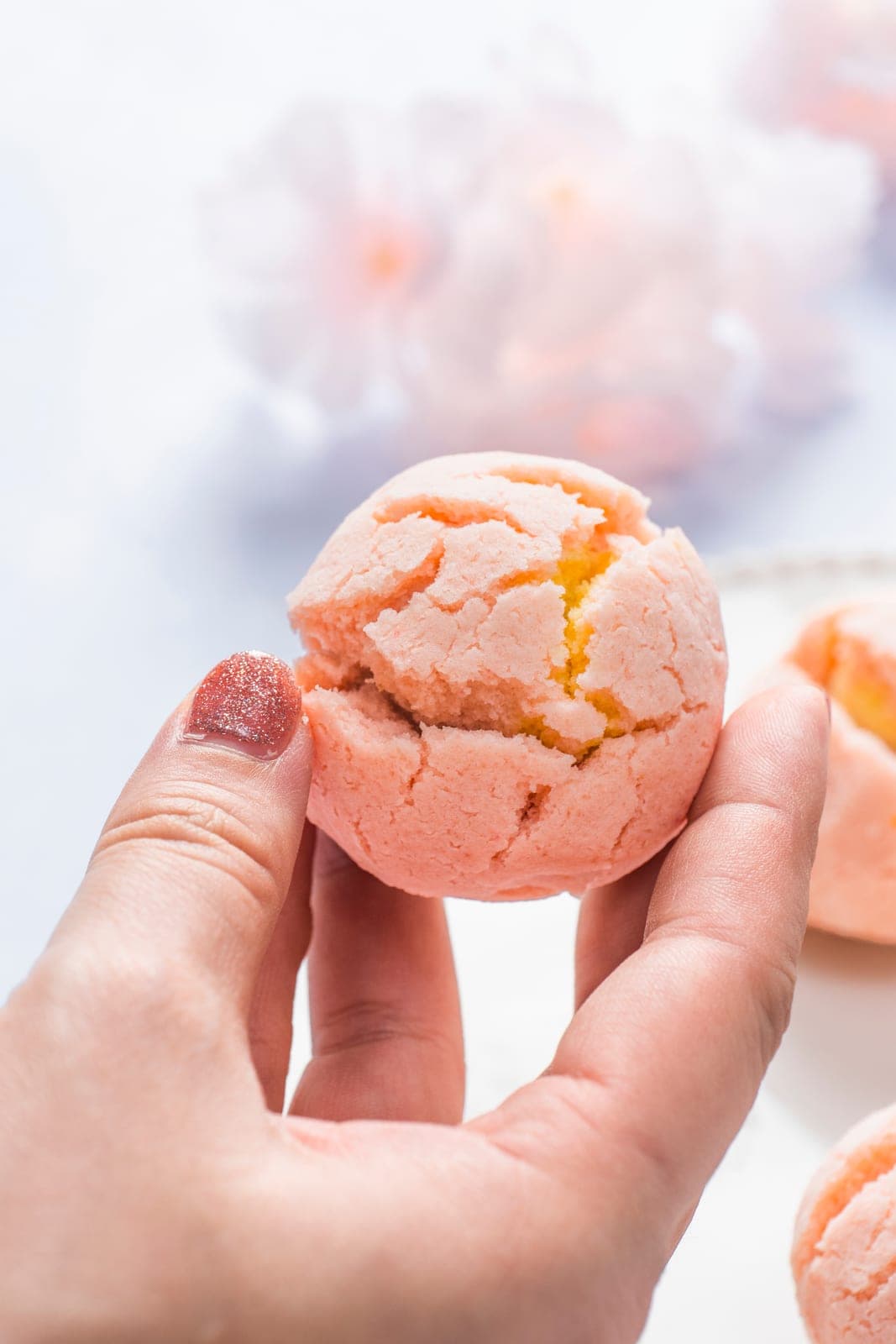 06
06Powdery cherry-blossom sweet
A soft, crumbly steamed confection scented and coloured with cherry blossom, its name borrowed from shigure—a passing spring shower.
 07
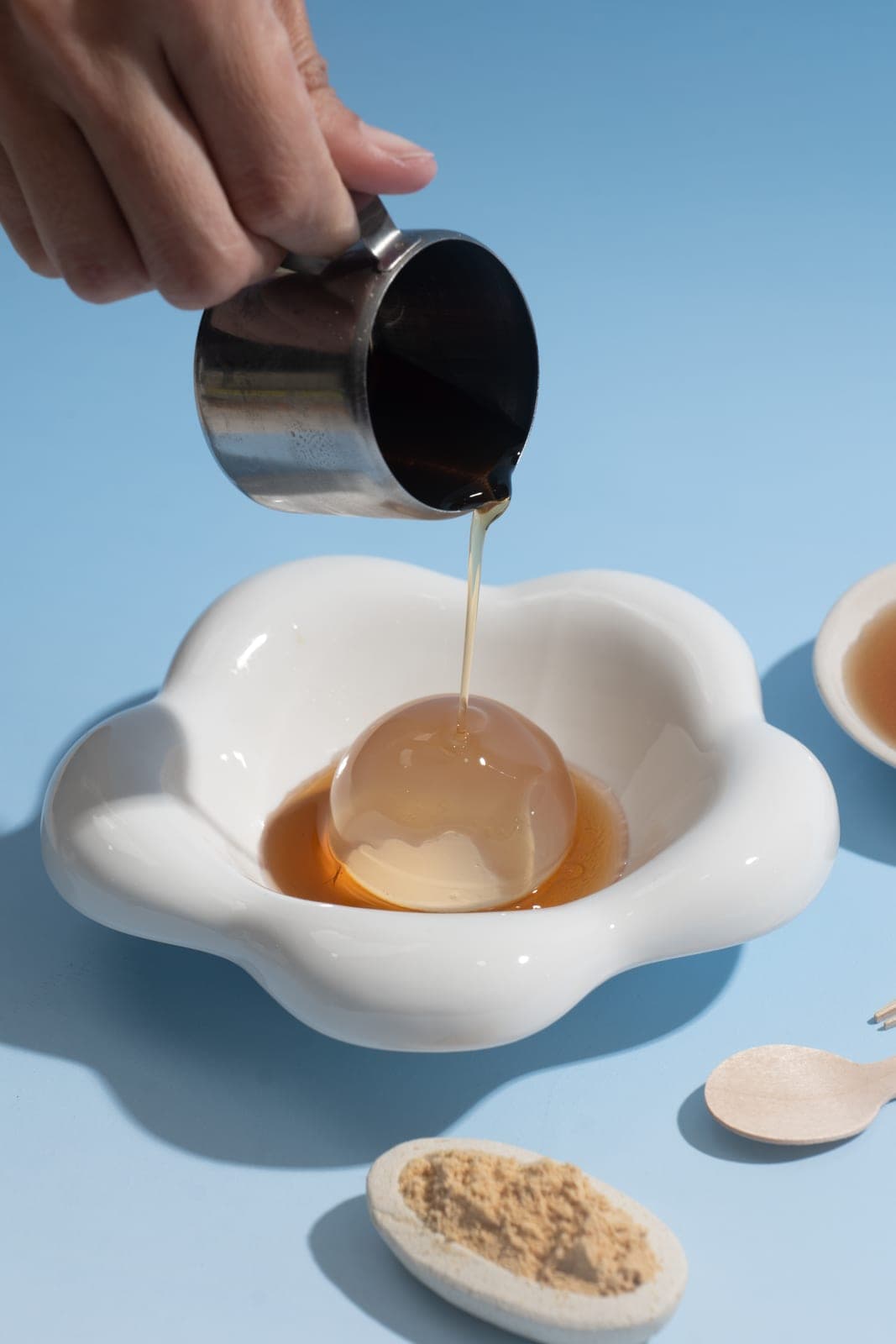
07A cool, glass-like wobble
A modern, glass-like take on bracken starch, chilled into a jelly and served glistening in syrup—valued for its cool wobble on a summer day.
 08
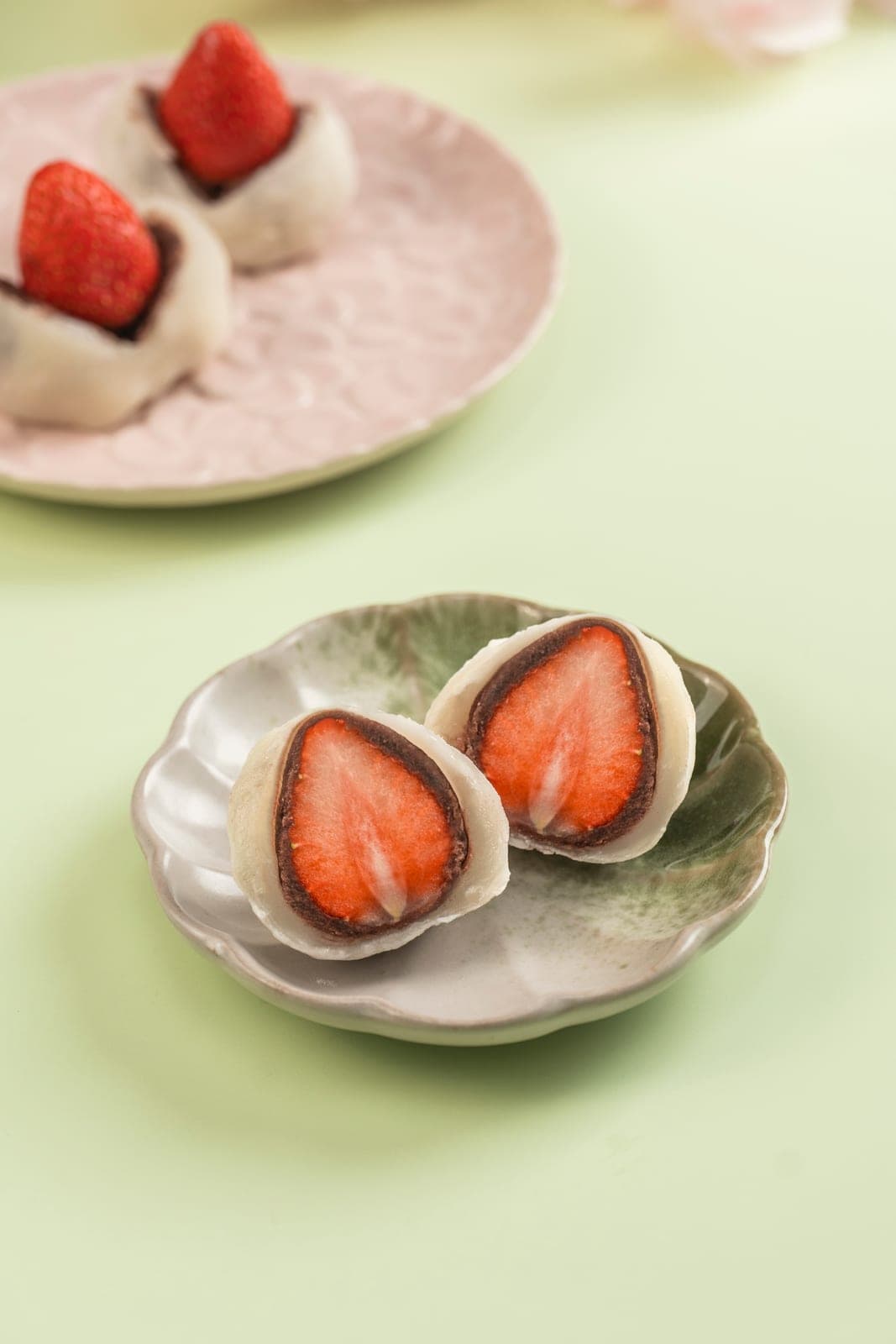
08Softness held within
A tender mochi exterior wraps a filling within, turning contrast in texture into its quiet appeal.
 09
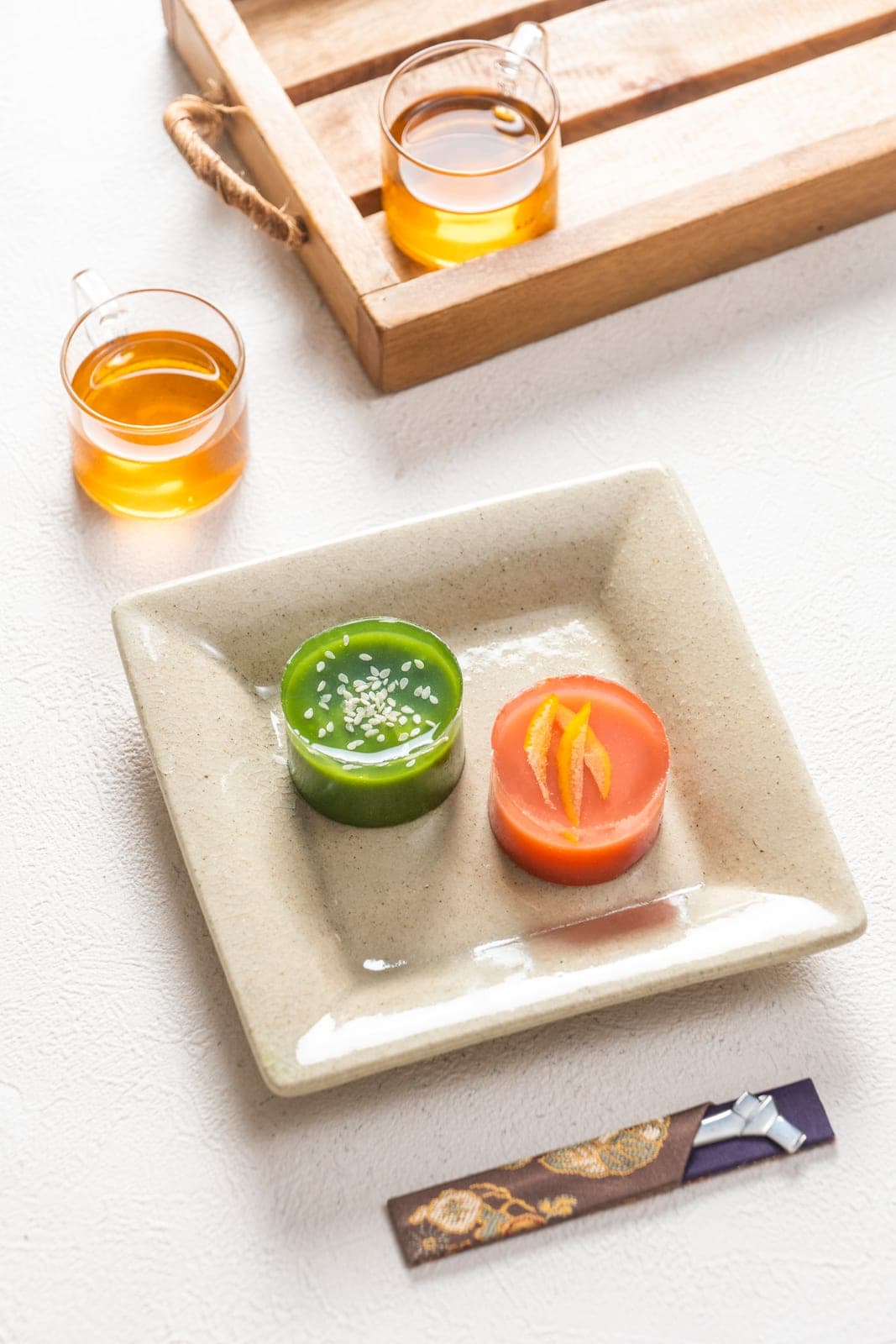
09Poured and set by hand
A category poured into a mould while still liquid and left to set—most often a gently sweetened agar or bean-paste jelly with a smooth, glass-like finish.
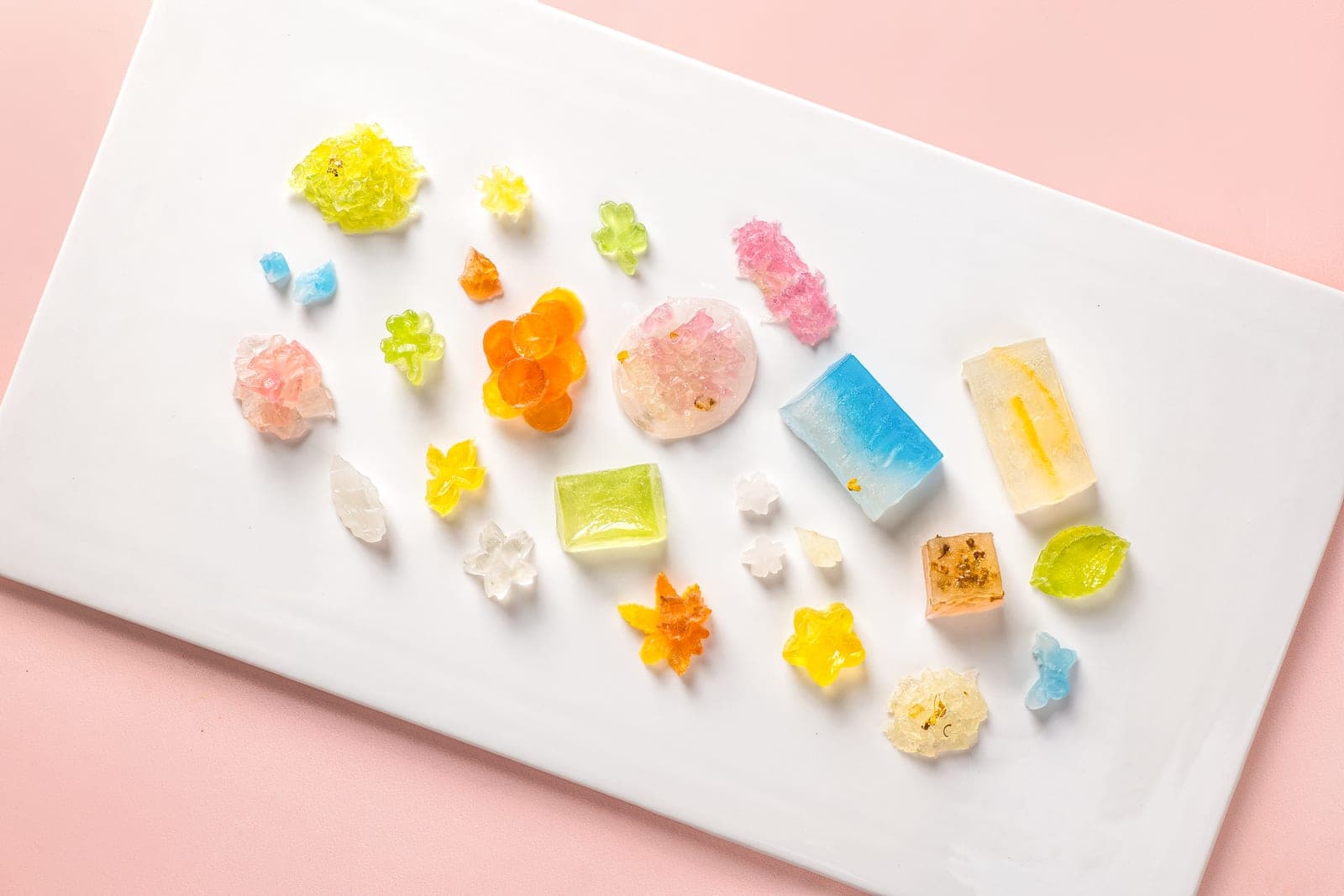 10
10Sugar crystallised into art
Agar jelly coated in a crackling layer of crystallised sugar syrup, its name meaning "amber sugar"—admired as much for texture as for taste.
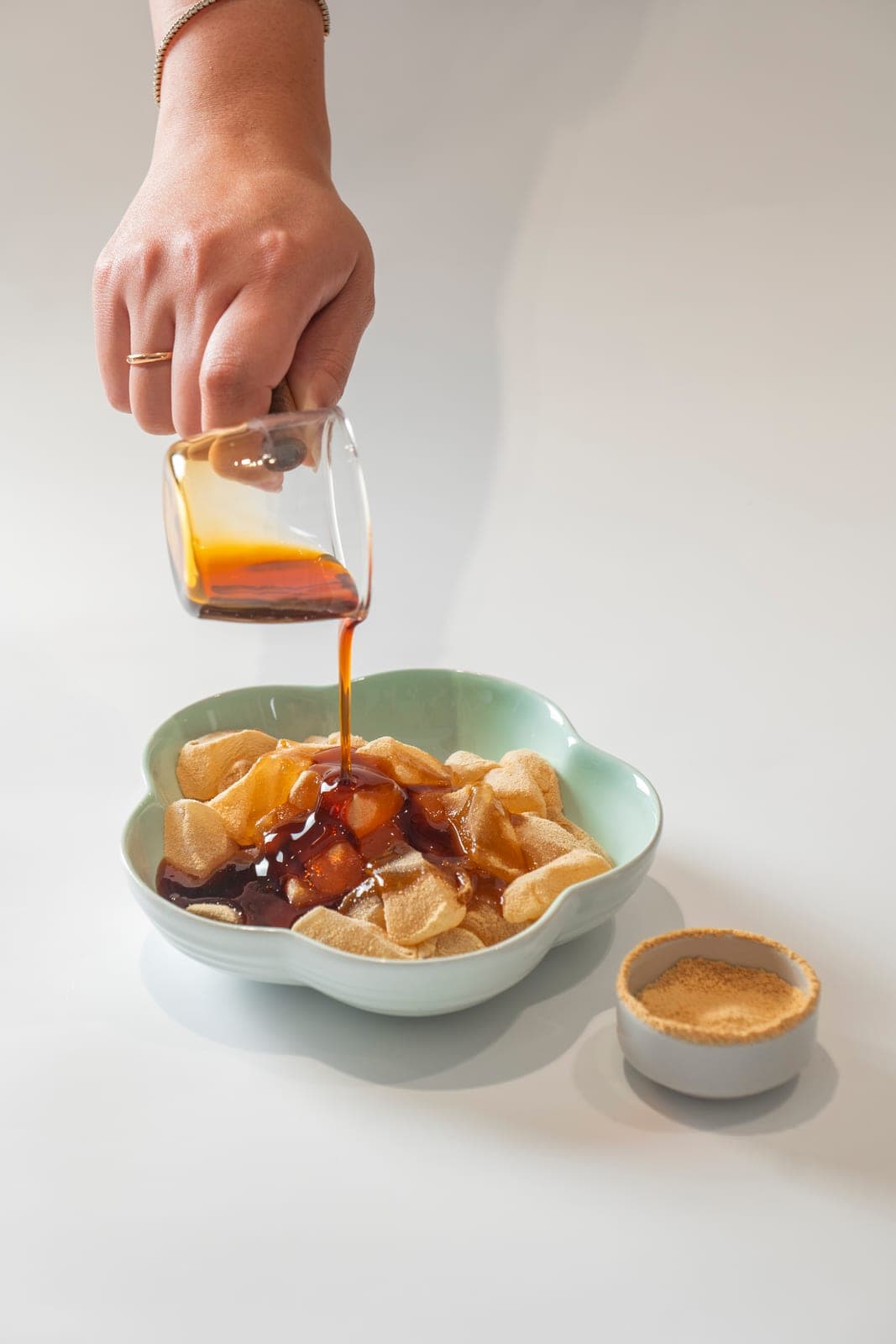 11
11Bracken starch, kinako-dusted
The traditional bracken-starch confection: soft, almost liquid in the mouth, dusted generously in roasted kinako soybean flour and kuromitsu syrup.
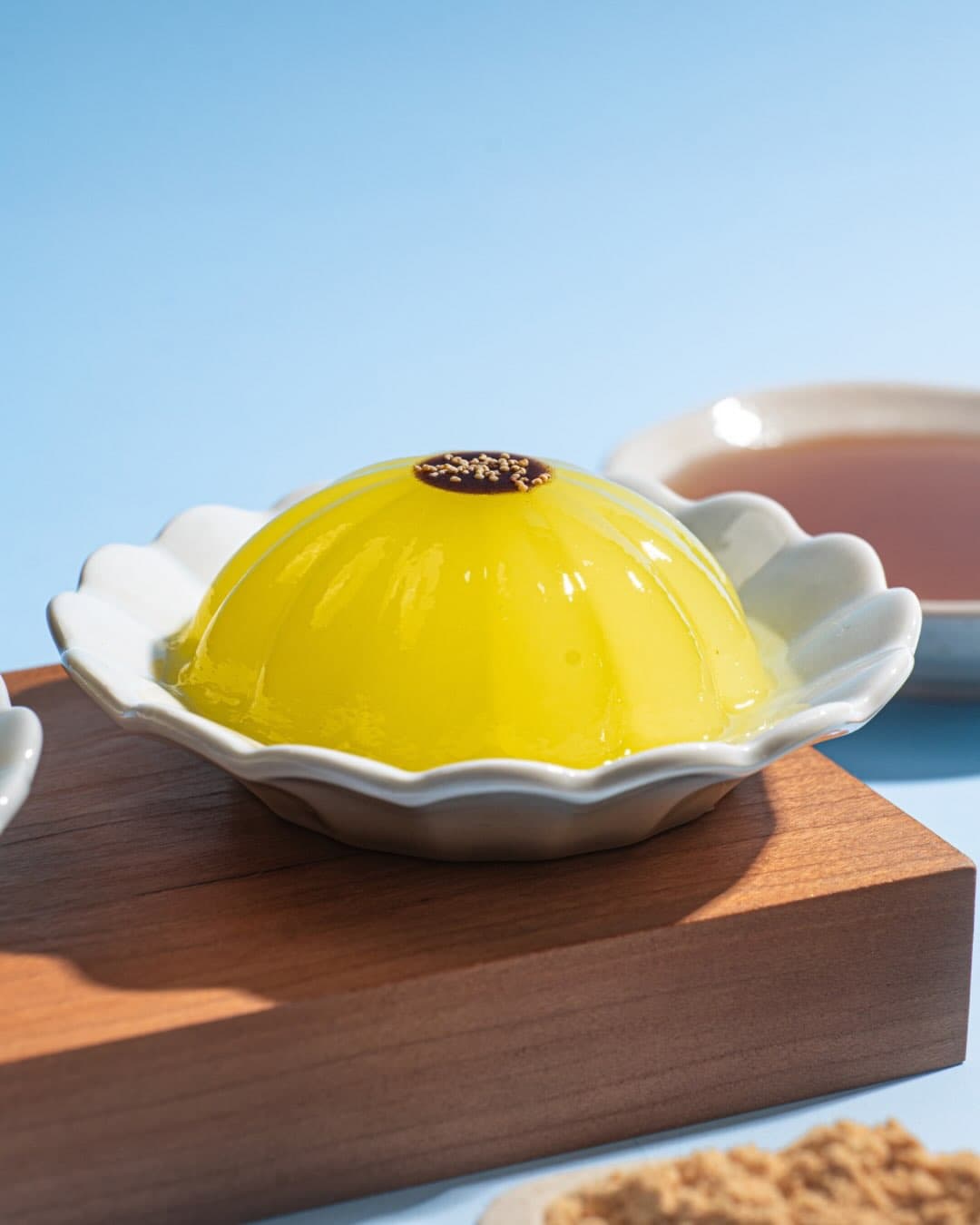 12
12Kudzu-root's cool clarity
A translucent, chilled confection made from kudzu (arrowroot) starch, softer and glossier than warabi mochi, served with kinako and kuromitsu.
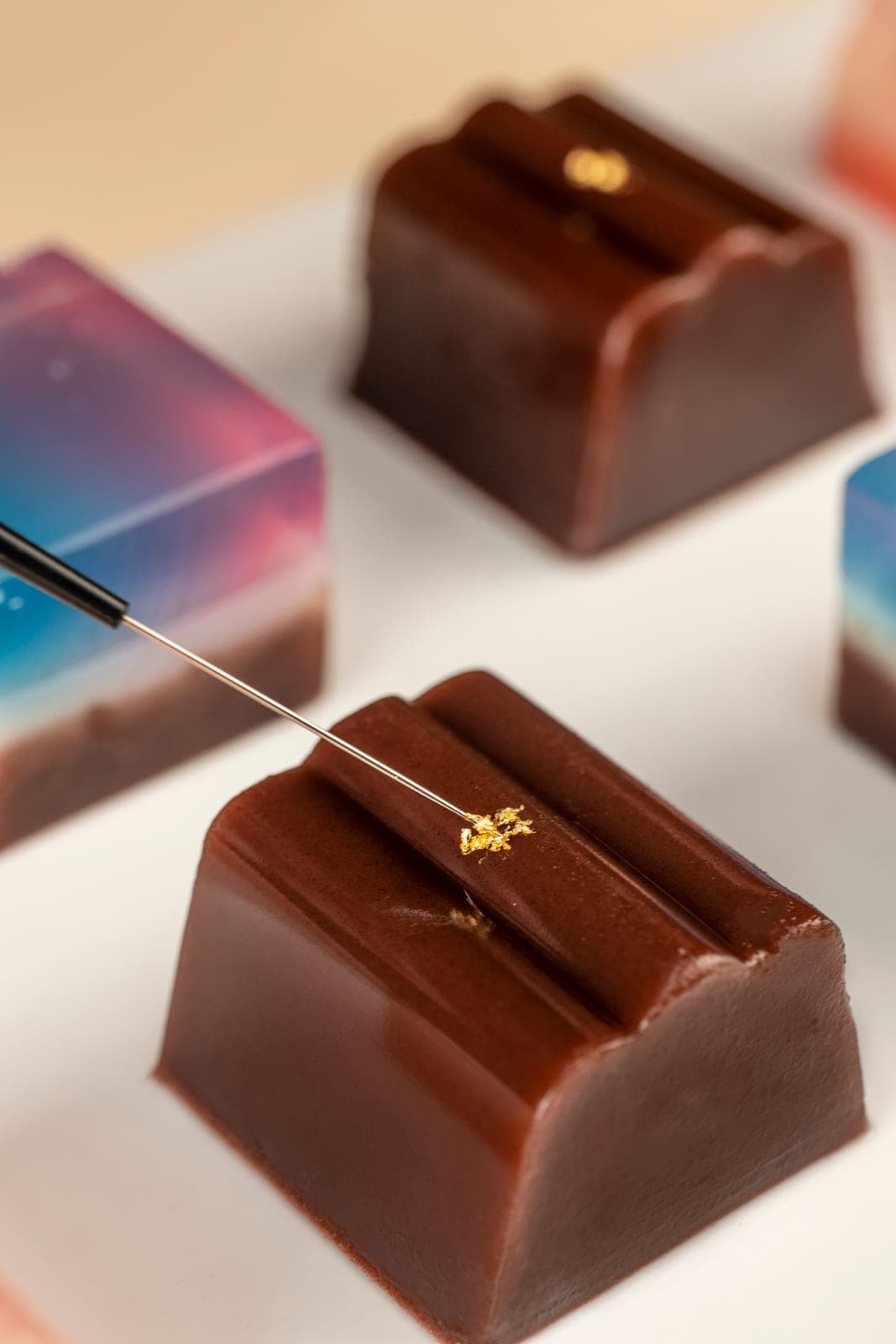 13
13Dense, sliceable sweetness
A firm, sliceable block of red bean paste set with agar, one of Wagashi's oldest preserved forms and a classic companion to matcha.
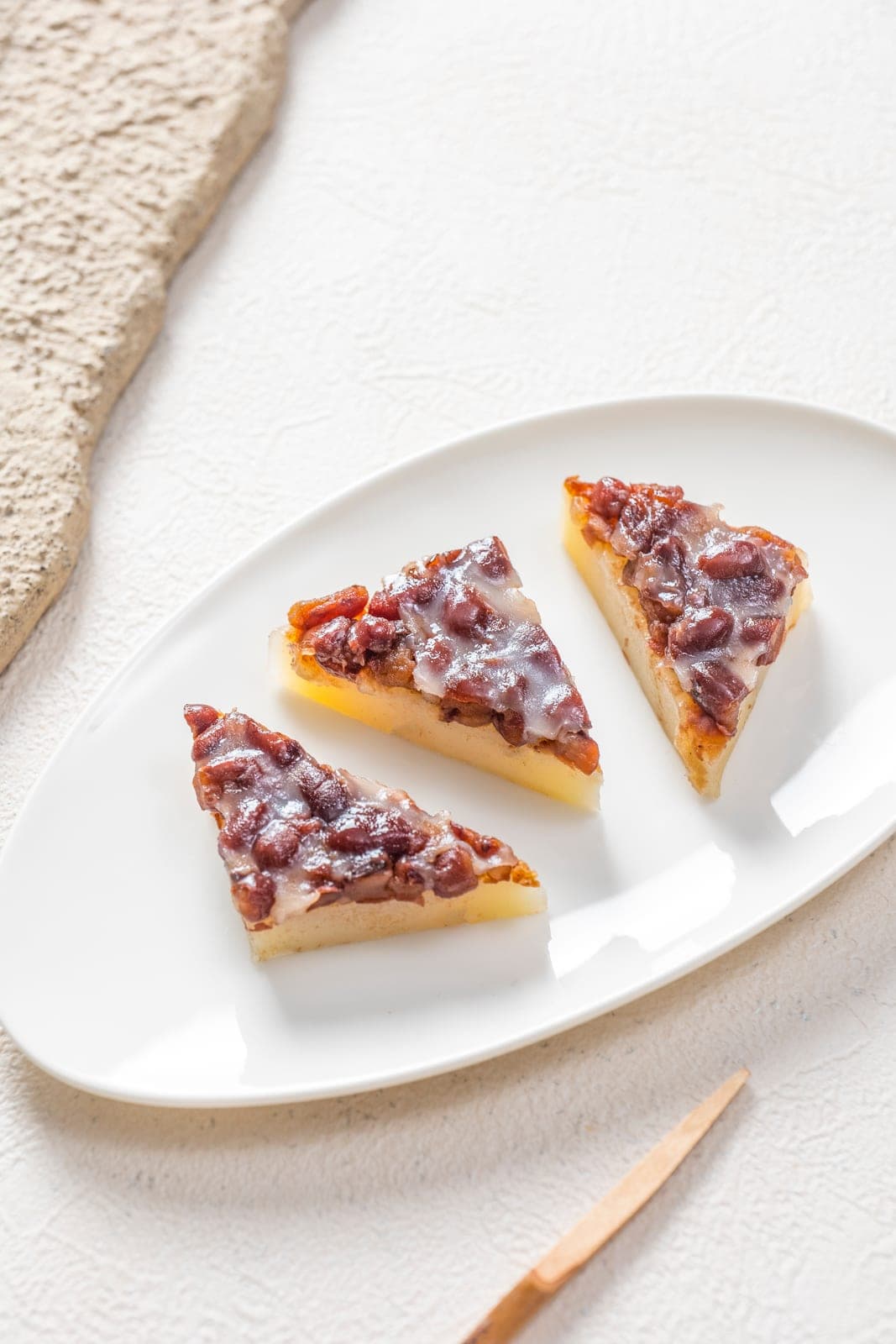 14
14June's triangular tradition
A triangular block of uiro topped with sweetened azuki beans, eaten each June to mark the year's halfway point and ward off misfortune ahead.
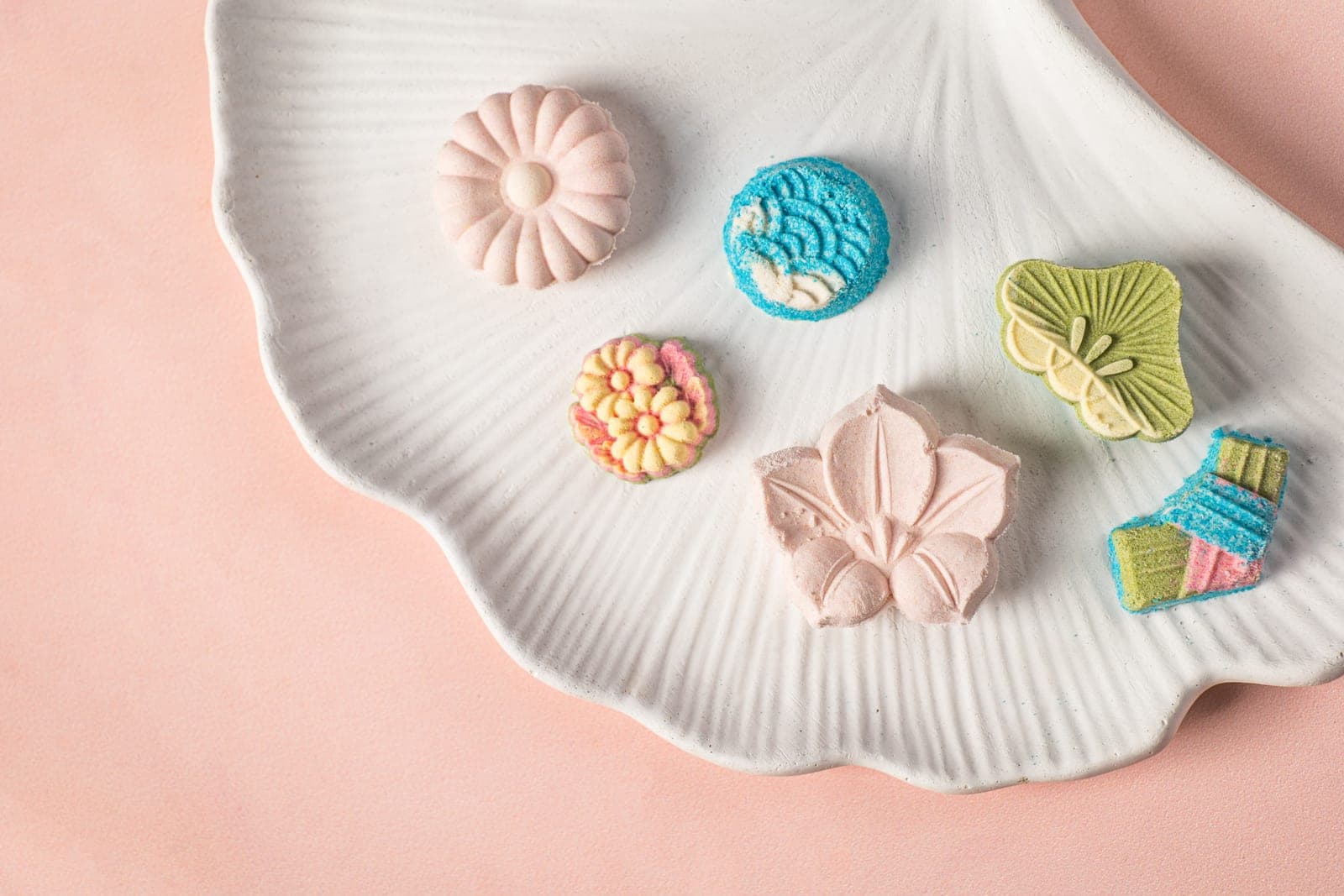 15
15Pressed sugar, carved by mould
A dry, pressed confection of sugar and rice flour, shaped in carved wooden moulds into flowers, seasons, or auspicious symbols.
手 — From material to expression
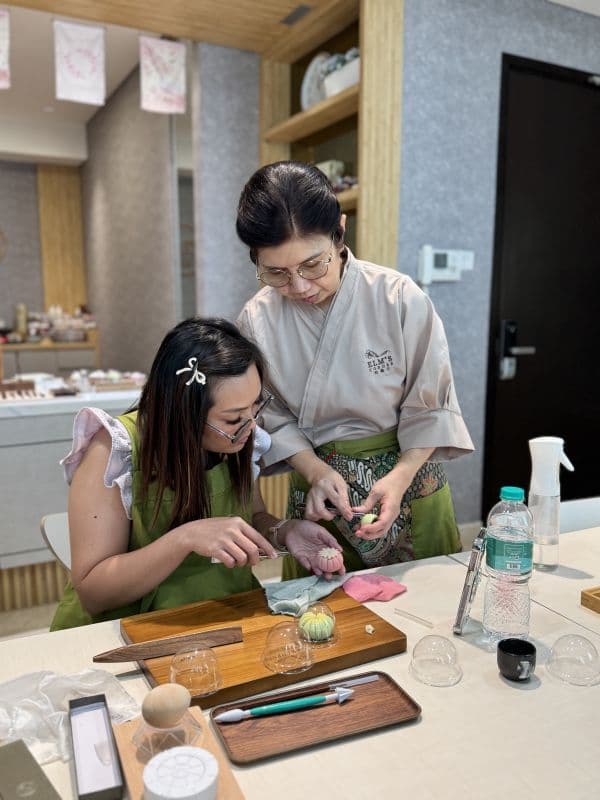
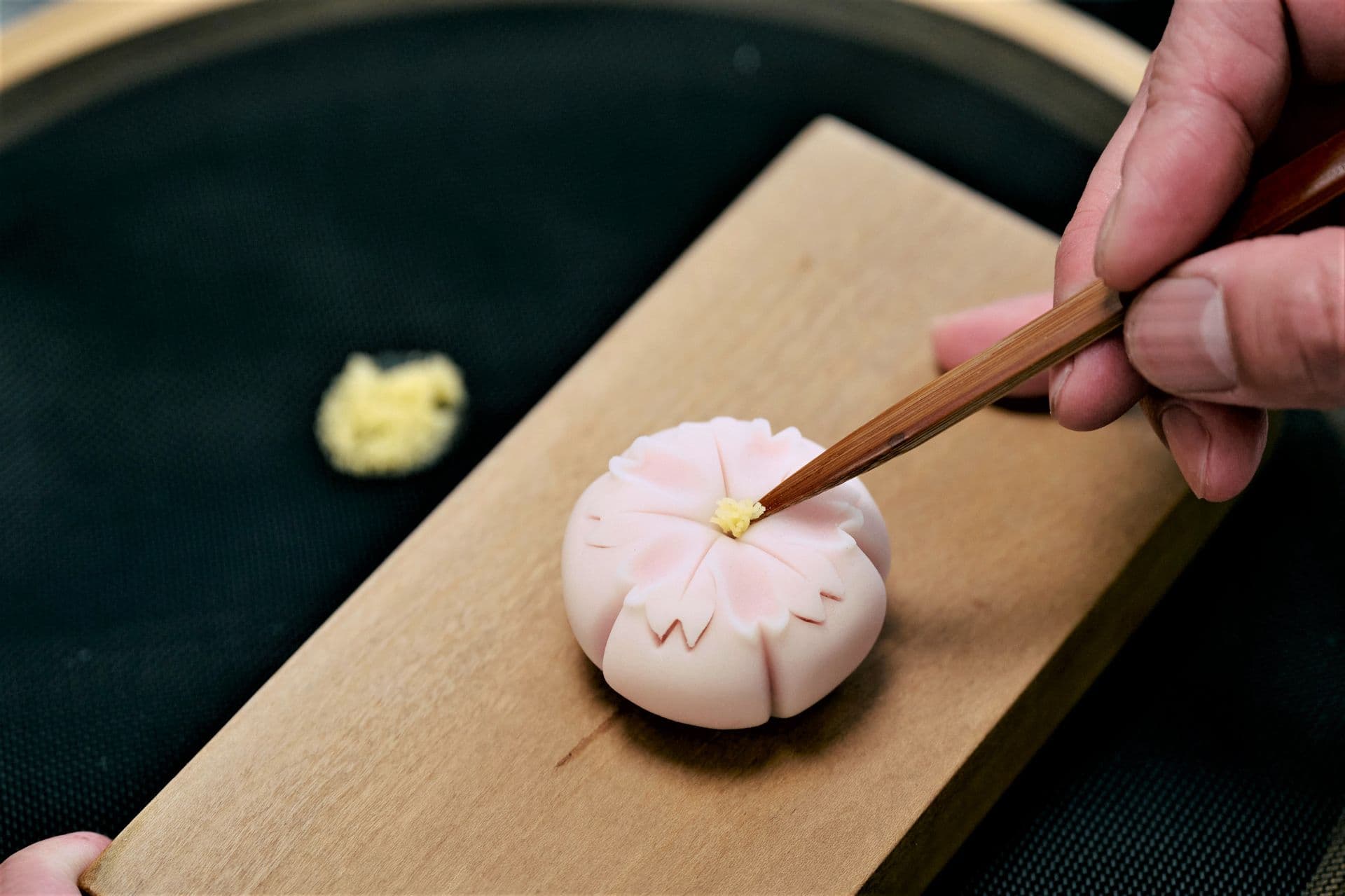
Technique becomes personal through practice.
Begin with the base, filling, colours, and the season you want to express.
Balance colour and proportion before the final form is made.
Hands, shaping tools, cutters, or moulds bring the idea into form.
Fine lines and small impressions give the surface rhythm and character.
The finished sweet becomes part of tea, hospitality, conversation, and memory.
“Wagashi is not only something to see. It is something you can experience.”
結 — The journey continues
You have followed Wagashi through time, nature, form, and the hand of the maker. The next chapter is one you can shape yourself.